ships log
In the Bin 11.11.2025
A Fly Died in My Glass of Wine 11.27.2025
The King's Kake 12.08.2025
When the Animals Go, We Go. 03.12.2026
Views expressed on this site and affiliated outlets are those of SISU and its contributors. They do not represent the official positions or policies of the 937 Condominium HOA or its management company, Bluestone.
In the Bin 11.11.2025
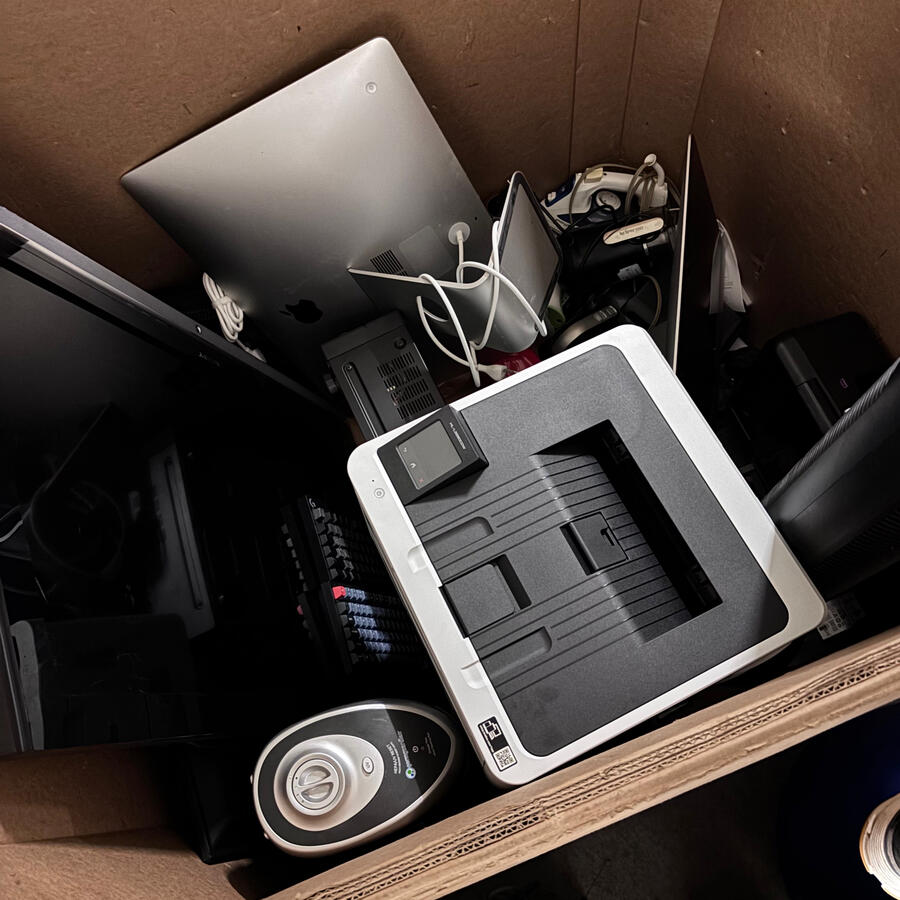
The evening before Green Century was scheduled to pick up 937’s e-recycling, I found myself standing inside the bin, its cardboard walls up to my chest. I was untangling cords, stripping away packaging, and rearranging the bounty of screens, monitors, and the odd assortment of small household appliances into neat piles.A resident approached, hesitant at first, unsure of what to make of a grown woman waist-deep in discarded electronics. She asked if there was still time to add her printer. “Yes,” I said, “bring it on down.”She did. She thanked me, genuinely, relieved to have a responsible way to let go of what no longer served her. I could have used the moment to forge a connection. I need allies on my ship of one, but I bit my lip instead, unsure what might come out.
Because in that moment, I was engulfed in an existential crisis. The effort felt strangely theatrical- the organizing, the emails, the flyers, the research,- a kind of hollow ritual designed to soothe the persistent tension created by how much we consume.The global economy runs on a deficit. This year, Earth Overshoot Day fell on July 24th- the date when humanity’s demand for natural resources exceeded what the planet could regenerate. Each year, that date inches closer to the start.
Recycling won’t reverse that on its own. And as recycling becomes more privatized, the imbalance becomes even starker. A weekend collection event, no matter how well attended, cannot shift the trajectory of environmental decline. But it can shift our awareness. It can show us what we already know but don't yet know how to change.And change is precisely what we need to do. The name SISUSUSI isn't about symmetry. Its about quiet strength that moves forward despite the odds- a willingness to keep going even when the path feels foolish or small.Standing in that bin, under the artificial light, surrounded by the castoffs of modern life, nauseated by my own contribution to the rising tide of waste, I felt both the absurdity of it all and the flicker of hopefulness. A ship of one with plenty of room for anyone feeling the same.
The work may feel foolish. But that is precisely what it will take to turn this ship around, a ship of fools.
🦉🐍🐈🦦🦊🦢🐝
we're just prisoners of our own devices...
curious about oregon's recycling modernization act, senate bill 582 and how it impacts our region's businesses? the kitty will lead the way :)
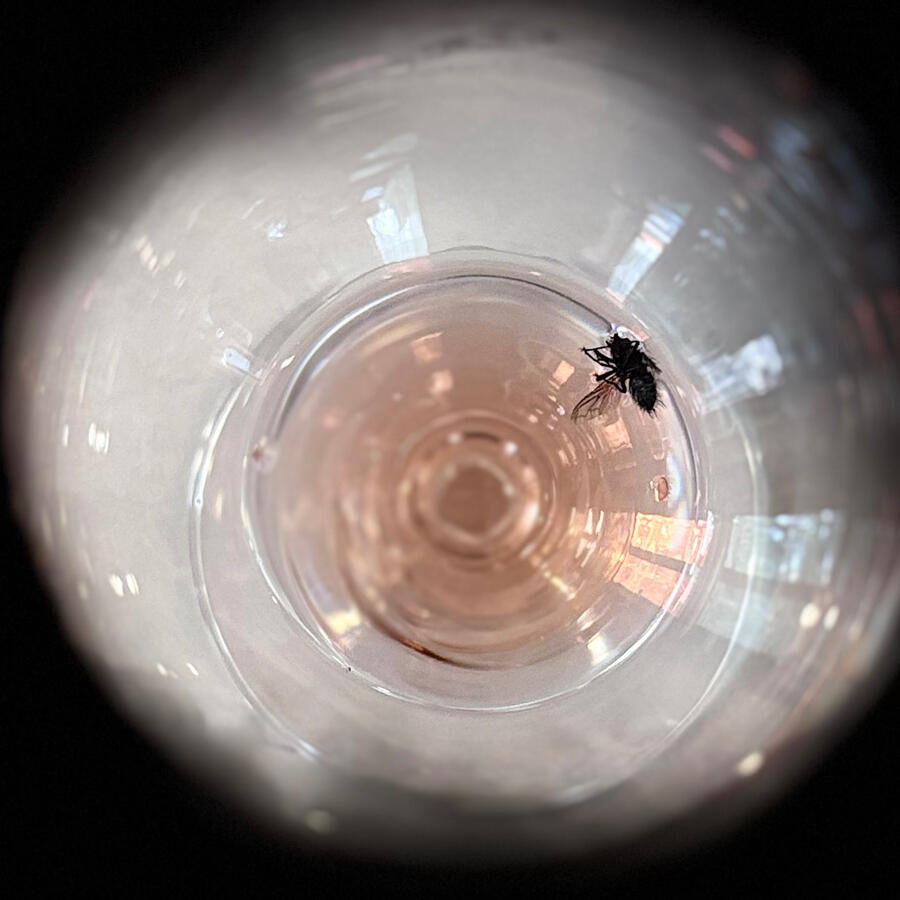
A Fly Died in My Glass of Wine
I have half a mind to ask Google or chat what prophecy this portends.But first...The wine was a 2019 Pinot Noir Rosé, Clos Griotte, a wine I discovered at Muse, a small wine shop off Northwest 23rd. I went there to meet a friend, a woman a decade younger but shaped like me by Boy George, Sasson, Bonnie Bell, and MTV. A time when we danced our nights away, blissfully unaware of the guardrails holding us upright.I sometimes wish she had been my college roommate. The one I was assigned was cut from a different cloth. Early in the semester, I invited the entire hall to watch on her portable black and white TV, the Movie of the Week, The Graduate. She walked out after Benjamin’s opening scene, announcing to the room that she didn’t “get it.”My new friend, sharing the wine with me, feels like home. Her voice carries the same familiar lilt and cadence as my dad’s, pronouncing ‘car keys’ like ‘khakis’. And like my dad, she can hold my attention with her tales of growing up on a tiny, jagged island in the middle of the Atlantic- not too far away from the one where my father was raised, slightly north, about five thousand miles.Making a new friend comes differently now. Giddy excitement gives way to cautious anticipation. I move slowly, aware that certain truths cast shadows that don’t always flatter, and that honesty, even with ourselves, requires a more gentle hand than it once did.But what does this have to do with the prophecy of the fly?It was late September, the nights were growing longer; the chill arrived earlier in the evening and lingered later into the day. All the flies were taking their final flights; it’s just the way of things.This fly chose my glass to dive into..."Wine is a grand thing. It makes you forget all the terrible things." ~ Hemingway. I don't actually subscribe to this, but for the fly, I believe it was true.
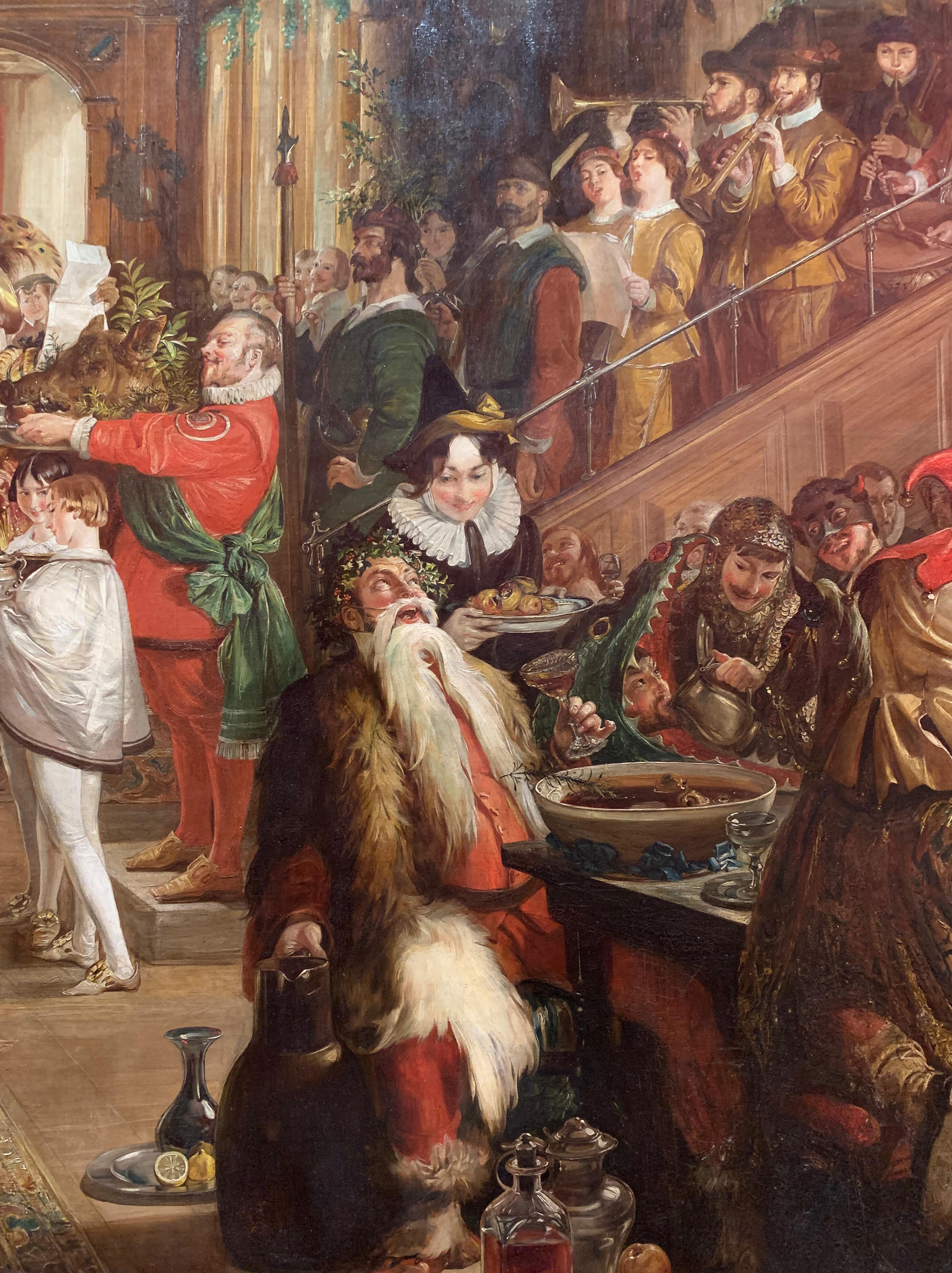
The King's Kake
Once upon a time,
before clocks ruled men
there lay a land
beyond Rome’s long shadow
a kingdom, now forgotten‘Twas winter
when light passed fleetingly as a fox,
and snow crept beneath thresholds
A time when a soul’s best friend
was his breathYet, on this eve of Yule,
all hearts are merry,
For the king hath decreed
free barter and trade
and a feast at his tableThe villagers in their mirth
pledged to craft a kake
not a confection found at court
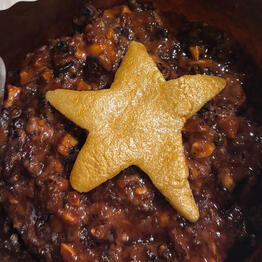
but a winter treasure born from their hearths, worthy of their king’s honorHazelnuts from Wild Farms,
apricots kissed by the sun,
cranberries, currants, and golden raisins- jewels long guarded in cupboards since harvestIn the Stone Barn did keep,
through many a moon’s turn,
this medley of fruit,
which was steeped
in brandy pear
then laid in French oak barrels claimed in the king’s last battle,
a tale oft told,
The teller never wearyInto this were folded aromatics, brought forth by caravan
from lands not yet seen:
cinnamon, clove, ginger, and
allspice,
cardamom, anise, and nutmeg.And though the winds blew fierce the morning of the fair, no warmer did the villagers greet one another good cheer!Their timbered stalls stood close
and smoke rose mightly from braziers and
iron pans,
as the mingled notes of chestnuts, mulled wine, pitch, and pine lofted in the airWith reddened hands and woolbound throats, merchants cried their wares:
garlands of mistletoe,
candles of beeswax,
fruits preserved in honey,
soaps of tallow and sage,
cottage cheeses bound in cloth,
loaves studded with candied peel
mushrooms dried on string
woolen mittens,
felted hats,
leather straps
hand-forged knives
and chains of iron
glazed clay crocks
wooden spoons and wooden trenchers
gingerbread still warm from the fire’s embers
twists of licorice black as the devil’s own knight
bells to scare the spirits still
and tinctures and amulets to cure every ill
of this world,
and of the otherAll were gathered here.As the sun journied behind the hill,
So too did the stalls shutter
What little remained was freely given
that no man be left asunderAprons folded
hands washed in hash and sand
men’s beards combed smooth
children’s cheeks rubbed clean
buckles polished
tunics clasped
Each and all made their readyGuided by torches in their ascent
to castle gates wide open
flanked by knights on shining steeds
as jongleurs danced to
minstrels’ flutes and lyre
their emerald tights and long feathered plumes, alighting this frolicsome crewInside, a fire blazed
casting specters upon tapestry-hung walls
and behold, longer than the eye can see,
a trestle bord set all a glowThe men took their women by the hand
and to their seats be found
as milken maidens
poured
mulled wine and tapsters offered ciderPewter chargers then appeared
laden with pottages and cheeses sweetened with honey,
knotted yeast breads
and wastles of the finest flourThere were fishes
and creatures of the sea;
oysters, mussels, cockles, and squidThere were goslings, puffins, and swans, partridges scented with roseA boar on a spit
mahogany skin crackling beneath the glaze,
venison, civet of hare, and the great hind quarters of stagBoiling pots of sausages, pies of black birds and pigeons sealed in thick crustsand larded pheasants
their beaks gilded
their eyes berries
Feathers carefully reapplied
a spectacle as if about to take flight...Such abundance
never before heldAnd to their feasting
The king did add
a revel unbound;
carolers, masked strumming mummers
on pipe and stringBoots struck the floor
heels kicked high
hands clutched hand
and all took their turn
round and roundtillwith bellies full
and heads a -spinA horn did blastIt cleft the din
and all at once stilled the hallFor behind the crimson curtain did appear
Their King!
Donned in red velvet
Snow white fur at the trim
He stood upon a golden chariot,
His checks a jolly glowA silver platter then did appear
and haloed all around in blue
from candles kiss
across the brandied fruitOur Kake!Unsheathing his sword,
and with one quick stroke
a measured slice
aloft for all to seeTime did still,
our breath, we did not take
all eternity lay on hinge
As the king leaned in
His nose a wiff did take
His eyes rolled behind closed lids
until at last
His lips did part
for his royal tasteHe declared:“My good and steadfast people
It is not Kake that feeds a kingdom
but the fruit of its labors
the fellowship of its hands
and the faith that binds sovereign to subject
And subject to sovereign
Know this truth:
You do not feed the Kake.
You feed the fruit!”To this
a thunderous cheerFor never was there a grander day or a kingdom so fair.Merry Yule
When the Animals Go, We Go
My Trip to San Francisco 03.12.26Calamari
Grilled lamb riblets
Butter beans slow-cooked in tomatoes and garlic
Feta, olives, wild mountain oregano
Grapefruit, oranges: blood and Cara Cara; toasted cinnamon and spiceWalnut, honey baklava
Vanilla praline ice cream
Shredded filo, semolina custard, crème fraîche, pistachio
Two glasses of Thymiopoulos Xinomavro, Naoussa
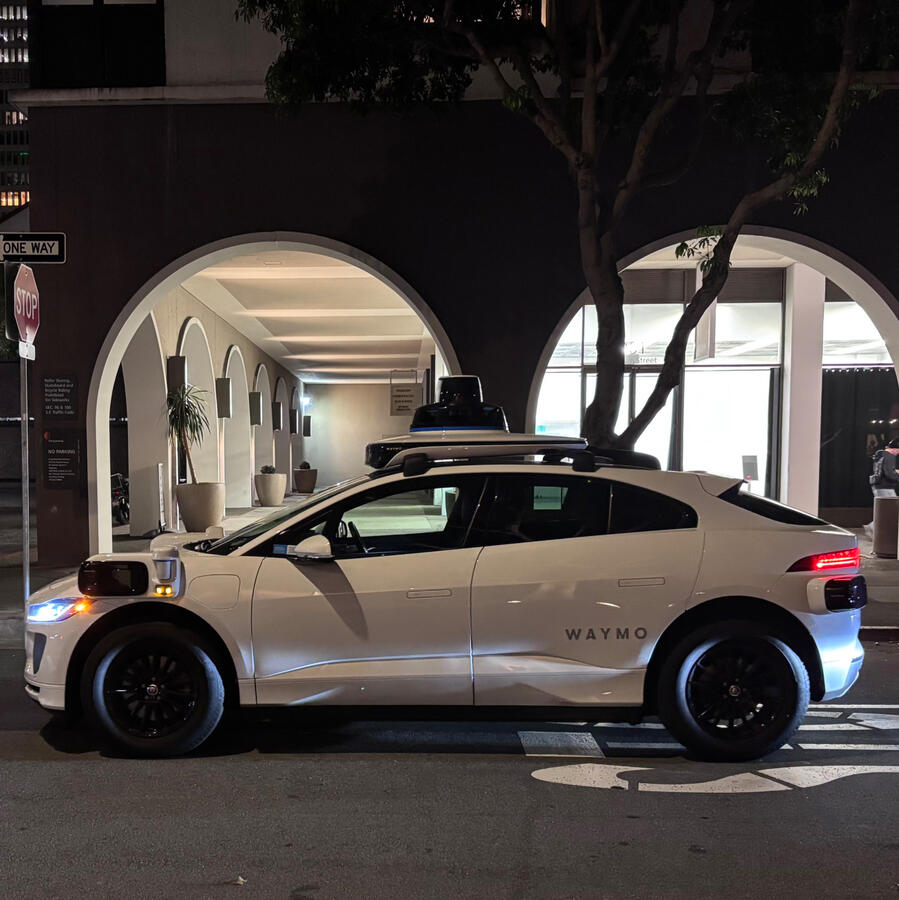
EspressoAfter dinner, we found ourselves sitting in the lobby of the Infinity Hotel, a property in Hilton’s Tapestry Collection–a rebranded space that once provided lodging to shipping captains anchored in the harbor, and now caters to travelers drawn to the lore of the place.Our gracious hosts, the night concierges, are attempting to cancel, on our behalf, one of the two non-refundable bookings we made through an independent online booking app–the second reservation made when we couldn’t locate the first.They are on hold.We arrived in San Francisco mid-morning and spent the day meandering—reacquainting ourselves with a city that feels immense, yet contained. At just under 50 square miles, it holds a population of 850,000, the crowning jewel in a region whose annual economic output exceeds a trillion dollars–a sum rivaling a small nation.We’ve been Ubering our way across town. Every ride a reenactment of the last. A car pulls up to the curb—usually a small SUV, white or grey, with a black interior. The doors slide shut, sealing in our captivity.The average Uber driver ferrying passengers across the city might earn $15 per fare. This is after the platform takes its percentage—sometimes as much as half. From what remains, the driver must pay for business expenses: insurance, depreciation, maintenance, and fuel. Our driver works every day, 7 days a week–not to get ahead, just to keep up.Waymo is also an option—an autonomous taxi. The World’s Most Experienced Driver ™️, Never Tired. Never Distracted ™️. It roams the streets in search of passengers, its rooftop sensors turning like tiny lighthouses. Behind each ride are networks, servers, and data centers–buildings filled with computers that run around the clock, drawing electricity and water to keep the technology going.Earlier in the day, we rode San Francisco’s hybrid light rail—the Muni—traveling both above and below ground. Across from us sat a row of single passengers. One, a young woman, was listlessly stroking her dachshund. The dog stood on her lap, its paws gripping her thighs.After a while, she lifted the dog into a Trader Joe’s canvas tote spread out at her feet.One paw caught outside.She tried to coax it in, the way one helps a child—with patience and care. The scene was comical at first, as the dog took on an air of haughty indifference. Then the dog bared its teeth.Seated one seat ahead was another woman with a foreshortened stare. She spoke out loud, doling out instructions, then tilted her head to pause. Even though I knew she was using technology and wasn’t a recent Langley discharge, watching her was unsettling.We were traveling together, but inhabiting entirely different worlds.Cities have always been places for the inexplicable and the absurd—cauldrons where cultures collide, where something new, sometimes strange, pushes up against what stood before.In San Francisco, that something often becomes intellectual property–products that can replicate a million times before you can say Gesundheit!Portland, a city of just 650,000, spreads across a landscape nearly three times the size of San Francisco. Here, we make things–food, wine, wood products, machinery, transportation equipment, apparel, semiconductors, art.Making a million more things–bottles, trucks, sneakers, Endless Pigeons–take raw materials, machines, workers, transportation, and time.∞For our second night, unable to secure a reservation at any of the restaurants recommended to us, I turned to an app to help narrow down options and selected an Italian restaurant—mostly because of its name, which hinted at a storied past, and because it appeared on a list of “best.”Sometimes, even before crossing the threshold, I know it won’t be good.It’s difficult for the people I am with when this happens. My partner loses his patience. How could I possibly know? I haven’t even ordered yet.But I do.I’m not clairvoyant. I’m just practiced at reading the signs:The house was full, the crowd young and eager.When the check arrived, my companion listened as I asked our server a question:“What do you think about René Redzepi?”
“Who?”
“In the news, Instagram—NOMA’s chef. The allegations.”
“Sorry, never heard of him.”Restaurants do more than feed people. They can change a neighborhood. A good one attracts.Soon an address gains value.Brooklyn, Austin, Copenhagen, Portland.In the early days of the Pearl District, the buildings were warehouses—spaces no longer serving their purpose.Artists came first, drawn by the neighborhood’s industrial grittiness, low rents, and open floor plans. Galleries followed, then coffee shops, bakeries, restaurants, and boutiques.Buildings were renovated.The streetcar arrived.Bicycles were everywhere.Cranes filled the sky.Then, like an emulsion, it broke.Like a paw caught outside the bag.Escalating costs,Vacant storefronts,Empty glass towers,Discarded belongings,Doorways serving as shelter.Cities are always changing. How depends on what we pay attention to.
Under The Surface
When the Animals Go, We Go
Using ordinary experiences of travel, transportation, food, and the economies of two West Coast cities, the essay explores the economic and technological systems that shape our lives. It looks at what they make possible, and what they may leave behind.The reservation buried in an inbox, the Uber driver working seven days a week, the autonomous taxi searching for its next fare, the woman speaking into a world only she could see, the waiter who did not recognize one of the most influential chefs of his generation, and the contrasting economies of two cities separated by a short flight.What connects them?Modern systems promise frictionless transactions, instant access, greater productivity, and extraordinary scale. Most of us enjoy these benefits, and we become accustomed to them remarkably quickly.But every system has its costs.